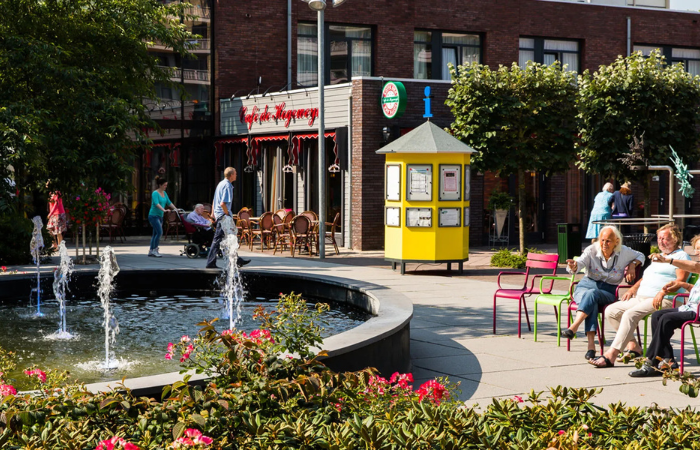
Just outside Amsterdam, in Weesp, you will find one of the most unusual care communities in Europe. De Hogeweyk, often called the world’s first dementia village in the Netherlands, was created for elderly people living with dementia who need support but still deserve comfort, dignity, and a sense of normal daily life.
Opened in 2009 by the Dutch care organization Vivium, De Hogeweyk has become internationally known for rethinking what dementia care can look like. Instead of a hospital-style nursing home, residents live in small shared houses designed around familiar lifestyles and routines. Interiors are shaped to reflect recognizable ways of living, helping residents stay grounded in an environment that feels more like home than an institution.
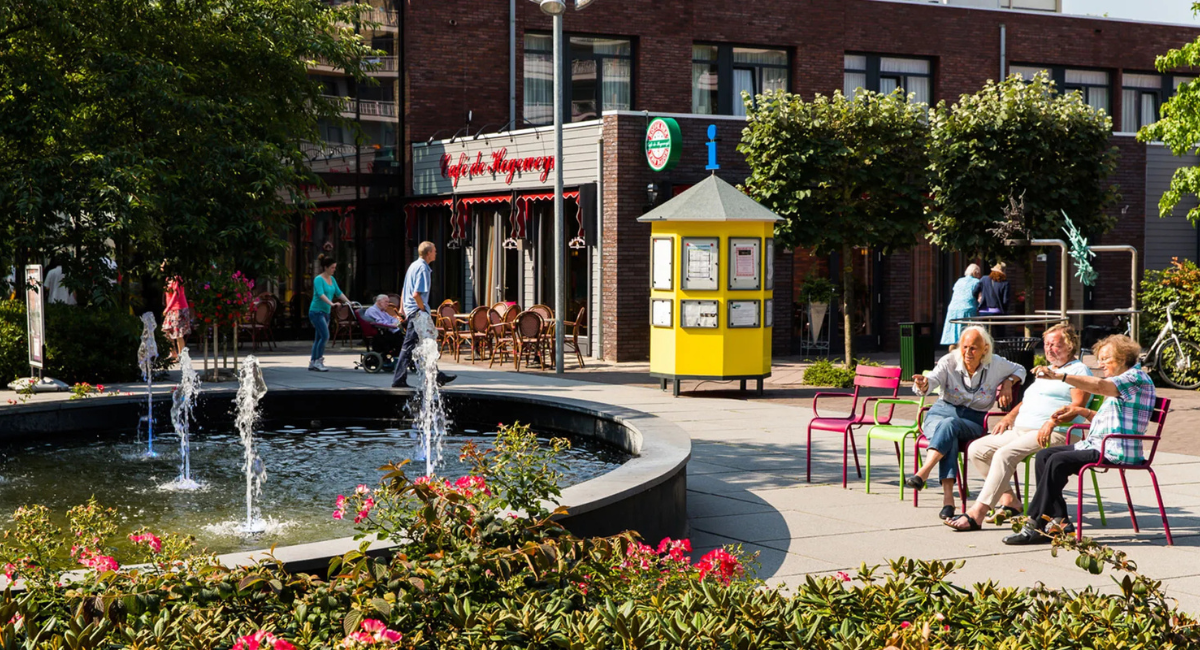
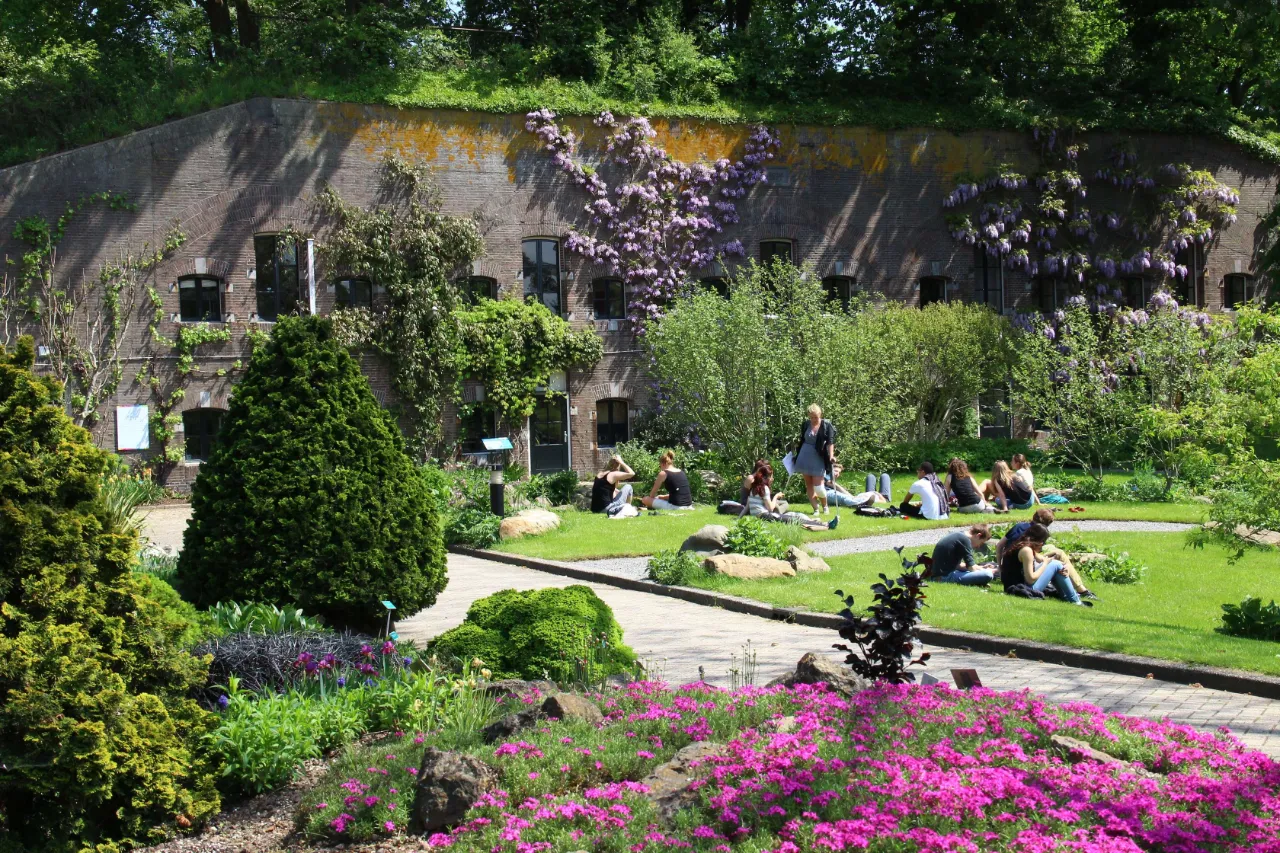
This dementia village in the Netherlands is designed to feel like a real neighborhood. There is a supermarket, a pub, green outdoor space, and places where residents can move around safely while still enjoying ordinary routines. The site is enclosed for safety, but it avoids the visual language of confinement. That design choice matters because familiar surroundings can ease confusion, lower stress, and support a stronger sense of confidence in daily life.
Staff members are present throughout the village, though the atmosphere feels natural rather than clinical. Caregivers often blend into everyday life as neighbors, shop assistants, or companions in shared activities. This person-centered model has drawn attention from healthcare professionals and policymakers around the world, many of whom see De Hogeweyk as a pioneering example of how memory care can prioritize lived experience rather than institutional efficiency alone.
Residents at De Hogeweyk typically live in groups of six or seven, with each house organized around a particular lifestyle theme. The goal is not to correct memory loss through rigid structure, but to create a setting in which autonomy, familiarity, and dignity remain possible even as cognitive ability changes. Studies and reporting on the model have often pointed to reduced anxiety, stronger social interaction, and less reliance on medication than in more conventional care environments.
For anyone searching for a dementia village in the Netherlands, De Hogeweyk remains the defining example. Its significance goes beyond architecture or healthcare branding. It asks a deeper question about how societies treat elderly people living with dementia, and answers it with a rare degree of imagination and humanity.